

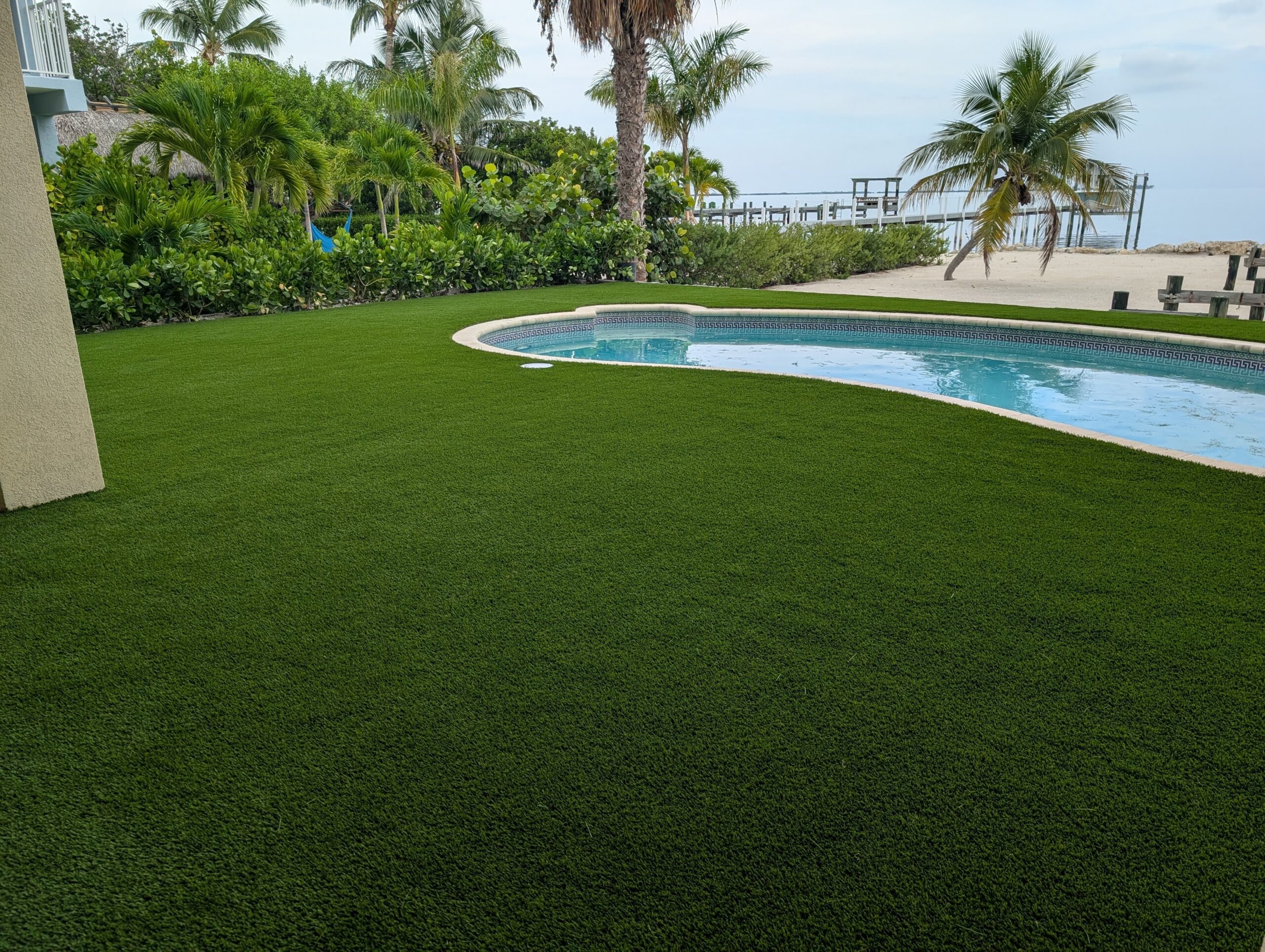
A professionally installed artificial turf system is specifically designed to drain in heavy rain far more efficiently than natural grass. Good artificial turf drainage starts with the whole system, from the turf’s permeable backing to the multi-layered aggregate base beneath, which works together to quickly channel water away, preventing the puddles and muddy spots common in South Florida yards.
As professional caddies, we’ve spent countless hours on the best golf courses in the world, and we know that performance starts from the ground up. A green that doesn’t drain correctly won’t roll true. It’s the same principle for your yard. Here in South Florida, we don’t get gentle showers; we get sudden, heavy downpours, especially during the summer rainy season. This is why one of the first questions homeowners ask us is, “How will artificial turf handle all that water?”
It’s a great question. The answer lies not just in the turf itself, but in the engineered system we at Golf Caddie Turf build beneath it. A successful installation is all about controlling water, and that’s something we take very seriously.
How Artificial Turf Drains: The System Beneath the Surface
When you look at artificial grass, you see the lush, green blades. But the real magic, especially when it comes to drainage, is happening in layers you can’t see. A high quality turf system is much more than a green carpet rolled out on the dirt. It’s an engineered surface designed for performance.
Here’s how it works:
- Permeable Turf Backing: Every piece of turf we install has a backing filled with precisely punched drainage holes. These allow rainwater to pass straight through the turf instead of pooling on top.
- Compacted Aggregate Base: This is the most critical component for drainage. We don’t just lay turf on top of soil. We first excavate the existing ground and install a multi-layer base of crushed, compacted stone aggregate. This base creates a stable, level foundation that also acts as a powerful drainage field. It creates void space for water to collect and slowly percolate into the ground below.
- Engineered Slope: Just like we design putting greens with subtle breaks, we ensure your entire lawn has a slight, often imperceptible, grade. This encourages water to move efficiently through the system and away from your home’s foundation.
A properly constructed base is what makes a professional landscape turf installation a durable, long term investment for your property.
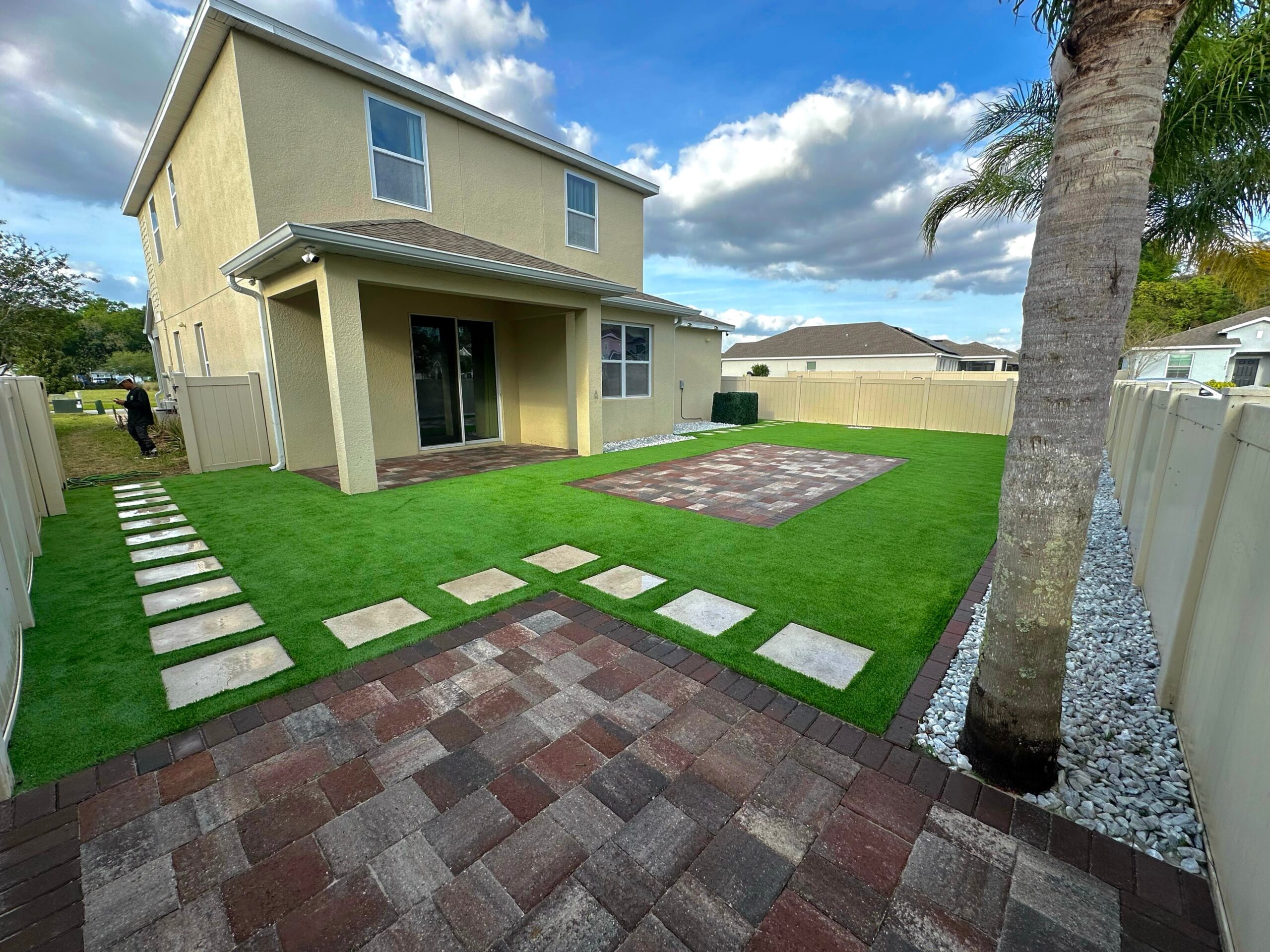
Base Preparation: The Key to Handling South Florida’s Downpours
In our experience across South Florida, from Jupiter to Miami, the base preparation is what separates a turf system that lasts from one that fails. Our region’s sandy soil and high water table present unique challenges that can’t be ignored.
Our installation process begins with a thorough site evaluation. We assess your yard’s existing slope, soil type, and potential water flow issues. From there, we typically excavate several inches of the existing soil. This step is non-negotiable; it removes organic material that can decompose and cause uneven spots, and it makes room for the new drainage base. Before any digging, we always ensure compliance with Florida’s Sunshine 811 call before you dig regulations for safety.
The aggregate base is then brought in and compacted in layers. This creates a foundation that is both incredibly porous and structurally sound. This method allows our turf systems to handle drainage rates of up to 30 inches of water per hour, which is more than enough to manage even the most intense afternoon thunderstorm.
Does Artificial Turf Drain in Heavy Rain Better Than Natural Grass?
For South Florida homeowners, the comparison to natural grass is stark. Natural lawns, especially those with a high clay content or compaction from foot traffic, drain slowly. After a heavy downpour, you’re often left with a soggy, unusable mess for hours or even days.
Here’s how a turf system typically performs better:
- No More Mud: Because water passes through the turf and into the aggregate base below, the surface stays clean. This is a game changer for families and pet owners tired of cleaning up muddy paws and unpleasant odors.
- Prevents Standing Water: The engineered base is designed to manage large volumes of water efficiently, preventing the puddles that can drown natural grass and become breeding grounds for mosquitoes.
- Quick Recovery: Your yard is ready to use almost immediately after a storm passes. Kids can go out and play, and you can get back to enjoying your outdoor space without waiting for it to dry.
Considering South Florida’s distinct rainy season, having a yard that can handle intense precipitation is a significant advantage for year round outdoor living.
Signs of Poor Drainage in an Existing Turf Installation
Not all turf installations are created equal. If the base was not properly prepared, you will see problems, especially after rain. If you have existing turf and are concerned about its performance, here are a few warning signs:
- Puddles or standing water that remain for more than an hour after rain stops.
- A squishy or spongy feeling when you walk on the turf.
- Weeds growing through the turf, which can indicate a base that is too thin or improperly compacted.
- Lifting seams or wrinkles, as water issues can compromise the integrity of the installation.
If you notice any of these issues, it’s a sign that the drainage system underneath isn’t working as it should. Our team is always happy to provide a free Caddie Care inspection to diagnose the problem and recommend a solution.
Why a Professional Installation Matters for Drainage
It can be tempting to consider a DIY approach, but artificial turf drainage is one area where professional expertise is crucial, especially in our climate. As caddies, we know that the slightest miscalculation in slope can send a putt yards off course. Similarly, an improperly graded base can send water toward your house instead of away from it.
Our team brings over 500 installations worth of experience to every project. We understand how to engineer a base that accounts for local soil conditions and rainfall patterns. This is just as critical for our custom backyard putting greens as it is for a pet run or front lawn. A green must drain perfectly to provide a true, consistent roll, and we apply that same standard of excellence to every square foot of turf we install. You can see how our recent installations turned out in the project gallery.
Frequently Asked Questions About Artificial Turf Drainage
Can artificial turf be installed on a slope?
Absolutely. In fact, a natural slope can be beneficial for drainage. Our crew will prepare the base to work with your yard’s existing contours, ensuring water flows away from structures and off the property in a controlled manner.
What happens to the drainage system during a hurricane?
A professionally installed turf system is extremely durable and designed to handle hurricane-force rain. The primary concern during a major storm is airborne debris. After the storm passes, the main task is simply clearing leaves and branches, then brushing the turf fibers back into place.
Does the type of infill affect drainage?
While the base does the heavy lifting, the infill does play a role. Standard silica sand infill is permeable and doesn’t impede water flow. We use specific types of infill for different applications, such as antimicrobial options for pet areas, all of which are designed to drain freely.
Your Yard, Ready for Any Weather
So, does artificial turf drain in heavy rain? When installed by a team that understands South Florida’s climate, the answer is a resounding yes. Reliable artificial turf drainage is about building a complete system where every layer works together to manage water effectively.
As caddies, we learned that you can’t have a great playing surface without a solid foundation. At Golf Caddie Turf, we bring that foundational approach to every lawn, pet area, and putting green we build. If you’re tired of a muddy, puddled yard, our team is ready to help. We can walk you through the process and request a free, no-pressure quote tailored to your specific property.